WHAT REALLY HAPPENS
DURING
AN IRONMAN
From getting out of bed at four in the morning to the final metres on the red carpet. Not a guide: what happens to me during a 226-kilometre day.
An Ironman does not start when the clock starts. For me, it begins the night before.
I try to have dinner by 7 pm and go to bed fairly early, but not too early. Falling asleep is not the real problem. The problem is waking up during the night: getting back to sleep is much harder.
Recently I have also tried melatonin, with good sensations.
YOU HAVE TO EAT.
EVEN IF YOU ARE NOT HUNGRY.
The alarm usually goes off between 4:00 and 4:30. It is an absurd time to do almost anything. Especially to eat.
I prefer savoury food, although I alternate sweet and savoury at breakfast. At that hour I struggle to eat, so I need something I can actually get down.
Everything else is ready from the night before. The first thing I do when I get up is put on the timing chip. Immediately. Because otherwise I know I risk forgetting it.
The white bag contains what I will need: swim gear, goggles, cap, wetsuit, my Garmin for the bike and the nutrition I do not want to leave overnight in transition. Bottles, gels and my two sandwiches as well.
My real fear before the start? Getting to the bike and finding a flat tyre.
I try to be in transition no later than 5:30. I check everything, especially the tyres. Fortunately I have never found a flat. In Frankfurt, because of the heat, I even partially deflated them the day before.
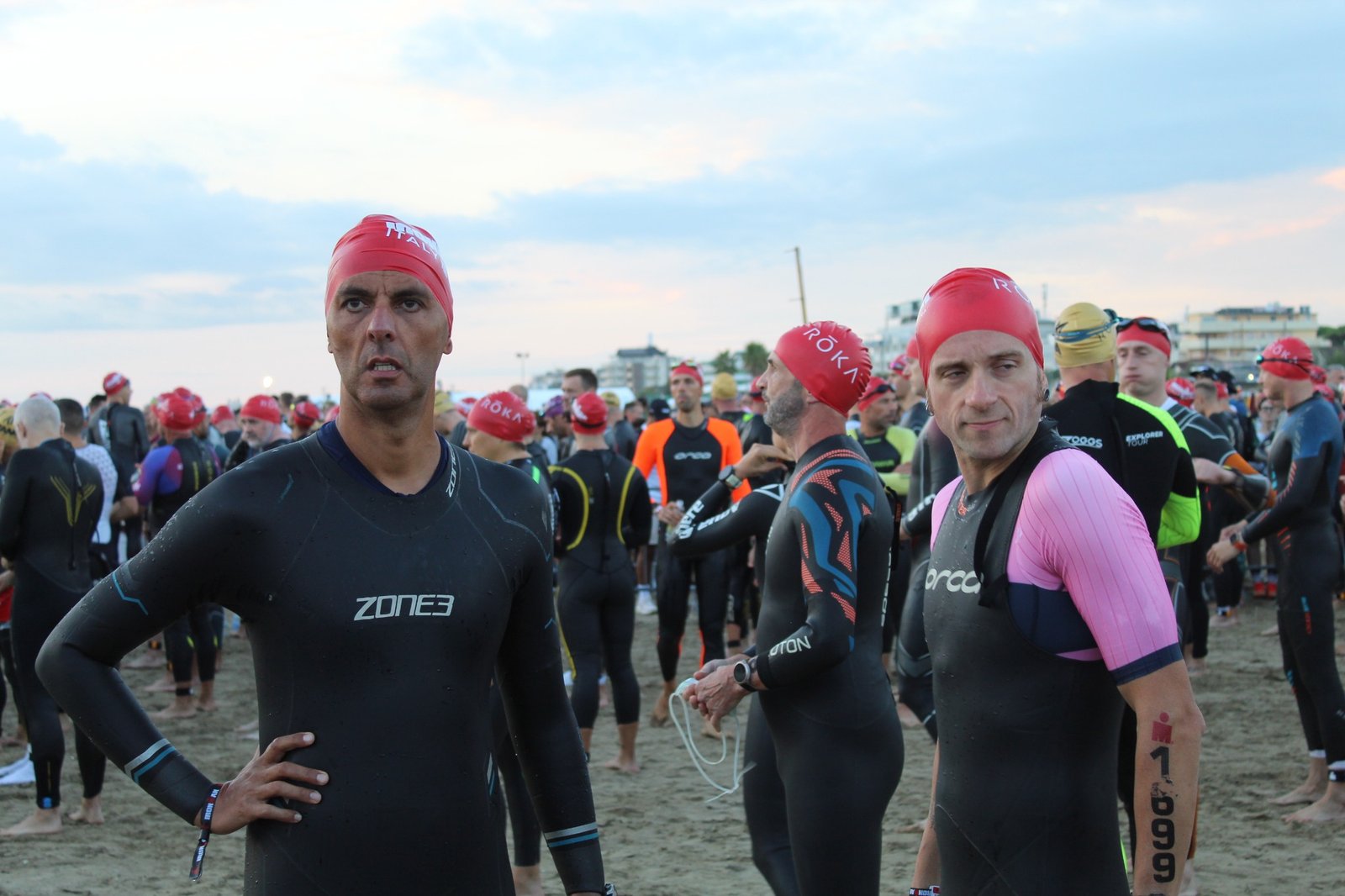
Then comes the wetsuit. If it is not too hot, I prefer to put it on fairly early. When possible I spend a few minutes in the water. I drink a lot, but from that point I stop eating: I prefer to start with a settled stomach.
THE PART THAT,
STRANGELY, I ENJOY.
Swimming is not the discipline I suffer most. In fact, it is normally an enjoyable part of the race.
I start under control. I want to avoid my heart rate rising too much in the first few minutes and feeling breathless inside a wetsuit that inevitably compresses my chest.
I settle almost immediately into breathing every four strokes and try to keep a steady rhythm from start to finish. Only around 3,200–3,300 metres does something change: I know there are about 500 metres left. That is when I start to accelerate.
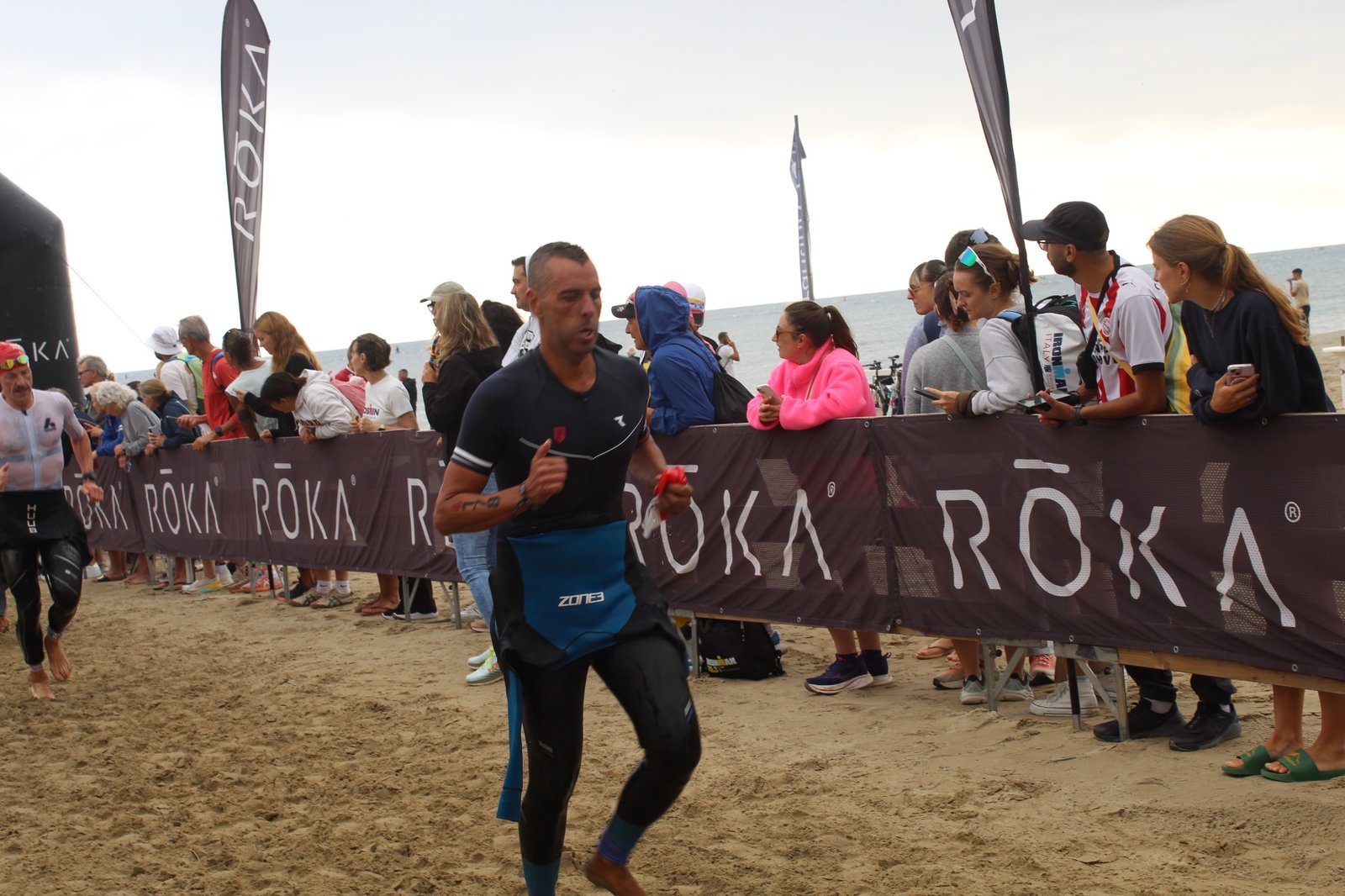
If we are in the sea, I start pulling down the wetsuit while I am still leaving the water. In T1 I take a gel, remove the rest of the wetsuit, put on my helmet and run to the bike. The shoes are already attached to the pedals.
ON THE BIKE
I DO NOT HOLD BACK.
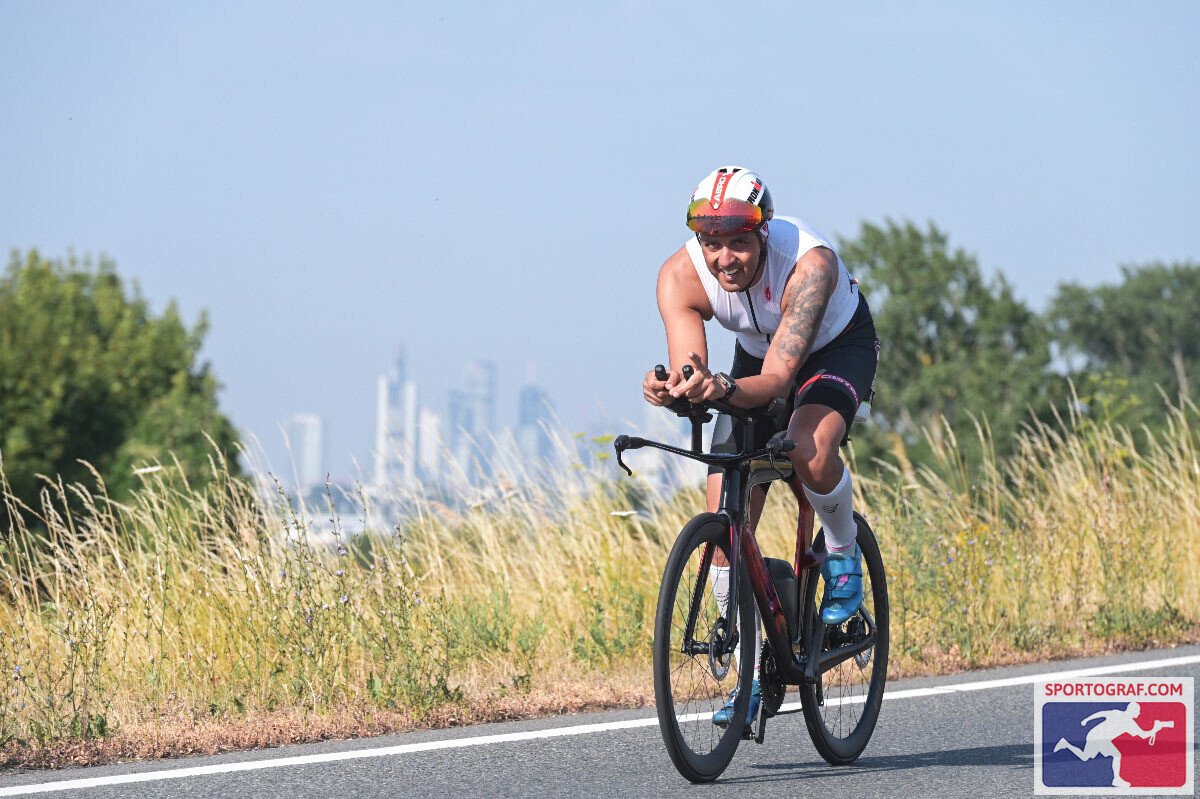
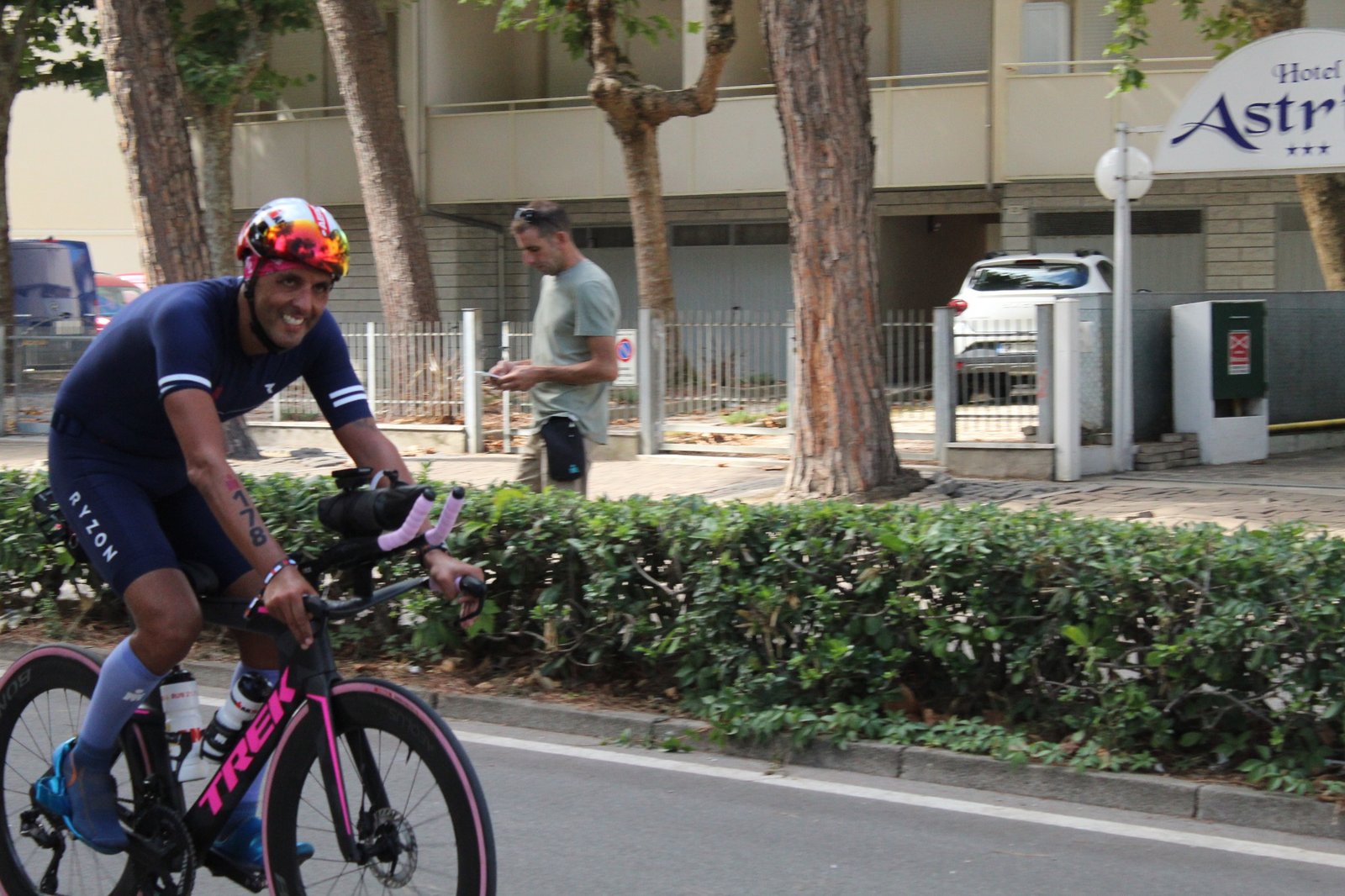
How I ride depends on the course. If there are significant climbs, I focus on managing those. On a course like Cervia, where Bertinoro is the only real climb, my approach is different: I push from start to finish.
I do not get on the bike thinking about saving myself for the marathon. I try to ride the best bike leg I can.
Over the years, though, I have learned that I have to eat and drink even when I do not feel like it. In the aero position it is very easy to postpone. That is why I set alerts on my Garmin. When it beeps, I eat or drink. It is no longer a decision.
During an Ironman you can have ten or fifteen different low points. I have learned not to worry too much: they often pass.
There are moments on the bike when it suddenly feels as if you cannot pedal anymore. Maybe you are riding into a headwind, speed drops and it feels like you are not pushing enough. Then it passes. It happens again on the run. And maybe that passes too.
A 90-GRAM GEL.
ALL AT ONCE.
At Cervia once I did something stupid: in T2 I took a 90-gram gel all at once. I felt sick for the first ten kilometres of the marathon. Those are the things you do not forget afterwards.
THE LAST TEN ARE
HEAD AND HEART.
Running is definitely my weak point. This year in Cervia I kept fuelling during the marathon and felt genuinely good until kilometre 25. Then strong nausea arrived. I did not vomit — perhaps that would even have been better — but from that moment the race changed.
The last ten kilometres are head and heart. You run a little, walk a little. Start running again. Stop at an aid station. Start again. It becomes a huge struggle.
For me something else happens around kilometre 30: I realise I am going to make it. Not because it is over, but because I know that somehow I will reach the finish.
And that is exactly where I probably make one of my mistakes: I start settling. I ease off a little. It is something I still need to work on.
Having people along the course changes everything. Family, friends, people who came there for you. But also people waiting for someone else who still shout your name as you pass. They treat you as if you were leading, as if you were winning the race. After all those hours, you really feel that push.
5°C.
WET.
Personally I suffer more in the cold than in the heat. At Aix-en-Provence the first thirty kilometres of the bike were brutal: around five degrees, we were wet and my fingers were so cold that even shifting gears was difficult.
Extreme heat makes everything difficult. But for me, cold can be even worse. You can prepare almost everything: on race day there will always be something you cannot control.
THEN YOU SEE
THE RED CARPET.
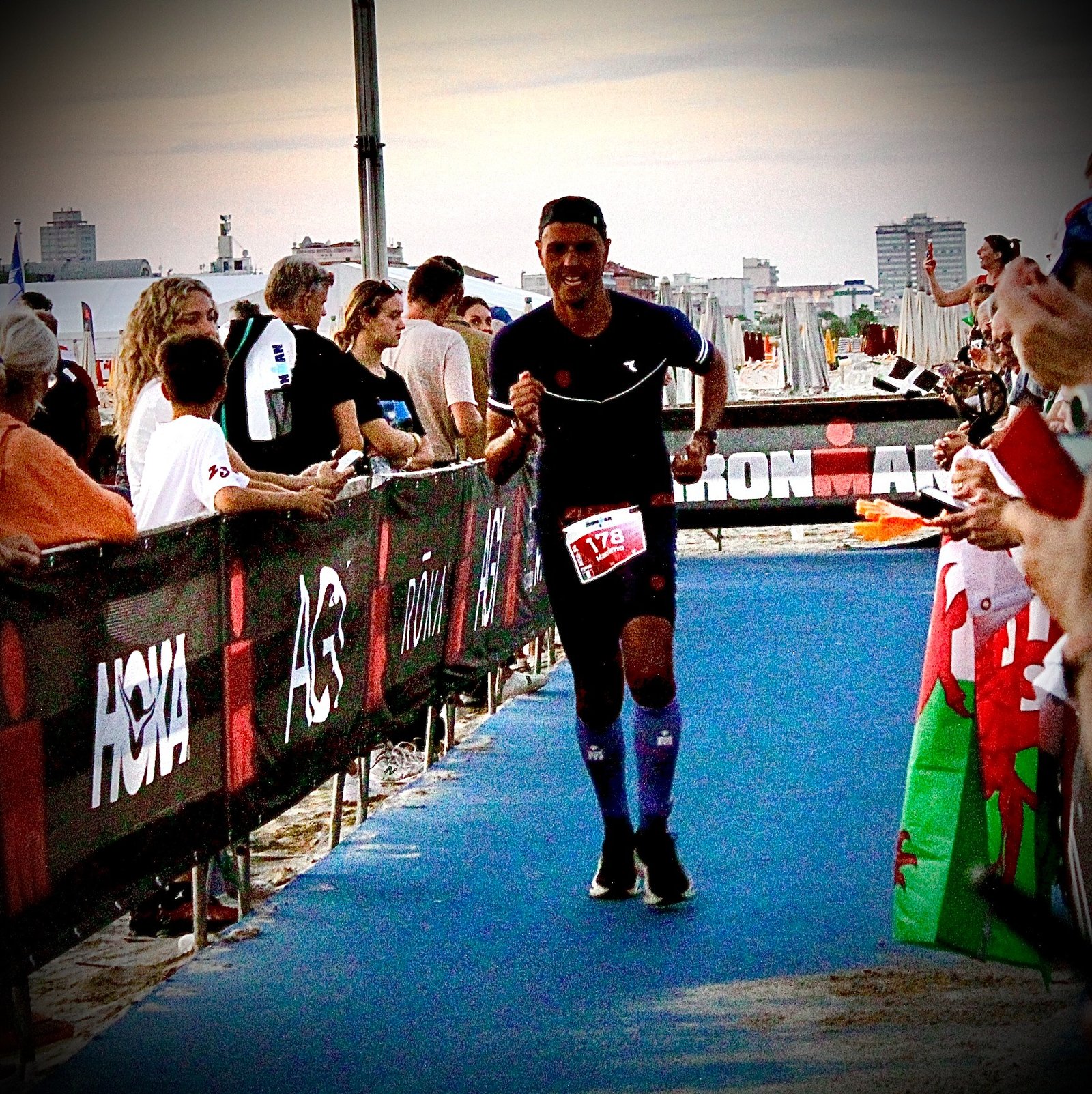
In the last three or four hundred metres I try to run properly again. I stop looking at pace and stop thinking about time. By then, what I had to do is done.
I look for the crowd, encourage the people along the course, high-five everyone I can reach. And I wait for one thing: the red carpet.
You see the arch. You hear the crowd. And you wait to hear the announcer say that you are an Ironman.
“I AM NEVER DOING THIS AGAIN.”
Right after the finish I am happy, but also completely empty. I am not hungry. I do not feel like drinking. I want to get out of the trisuit I have worn since morning and reach the people waiting for me outside.
And then there is the sentence I repeat to myself almost every time, especially from kilometre thirty of the marathon onwards.
AGAIN.
At that moment I am fairly convinced.
Then the night passes. And the next day I am already thinking about what the next race could be.
I do not think it is only about the emotion of the finish. That is huge, of course. But it lasts a few minutes. Preparation lasts for months.
Preparing for an Ironman forces me to be disciplined. To organise my time. To train when I feel like it and when I do not. To sleep better, eat better and take better care of myself.
I do not think completing an Ironman automatically makes someone a better person.
But the journey I take to get there, in some ways, makes me better.
And that is probably the best thing triathlon has given me.